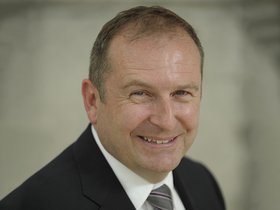
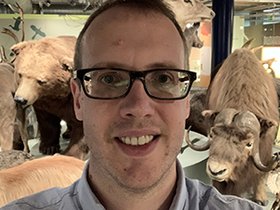
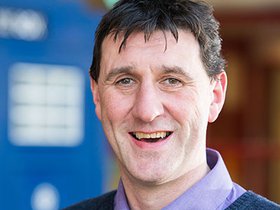
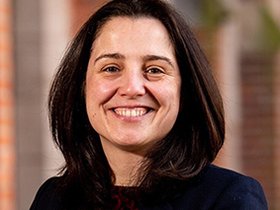
ASDC Trustees
Read Executive Committee minutes >
The committee members of the Association for Science and Discovery Centres are:
Ian Griffin (chair), Science Oxford, Oxford
Peter Trevitt (Treasurer), Techniquest, Cardiff
Teresa Anderson, Jodrell Bank
Vicky Brightman, Horniman Museum and Gardens
Goéry Delacôte, At-Bristol
Dr Anne Hunt, A.D.Hunt Ltd.
Dr Robin Holgate, MOSI, Manchester
Dr Robin Hoyle, Glasgow Science Centre
Heather Mayfield, Science Museum, London
Ian Simmons, Centre for Life, Newcastle
Louise Smith, Dundee Science Centre and Satrosphere Science Centre
Leigh-Anne Stradeski, Eureka! The Museum for Children, Halifax
Phil Winfield, INTECH, Winchester
Kenny Webster, Thinktank, Birmingham
John Ellison, The Eden Project, Cornwall
Dates for 2011 Board Meetings:
- 19 October 2011, Oxford Centre for Innovation
Dates for 2012 Board Meetings:
- 25 January 2012, Jodrell Bank Discovery Centre, Manchester
- 19 April 2012, venue to be confirmed
- 19 July 2012, venue to be confirmed
- 18 October 2012, Dundee Science Centre
Trustee election statements
Teresa Anderson
Director of the University of Manchester's Discovery Centre at Jodrell Bank
Biography
I'm currently Director of the University of Manchester's Discovery Centre at Jodrell Bank - a very exciting place that connects visitors to the 'Live' Astrophysics research being carried out at the Observatory, as well as showcasing research being carried out across the rest of the University.
We're very fortunate to be in the process of developing new visitor facilities at Jodrell Bank, which are due to open in May 2011.
As well as giving people a link 'live' to Space and what our scientists are doing while they are there, our new Discovery Centre will also focus on the perspective that Astronomy gives us on the Earth - which is a very rare thing, a tiny pale blue dot in the vastness of Space - and will explore our need to look after our planet and its environment.
We're looking forward to forging new and innovative links across the ASDC network as our new facilities allow us to develop our visitor offer further.
What I bring to the committee
- Strong background in and appreciation of STEM subjects and their importance for the UK
- Years of experience in Science Engagement with a wide range of audiences, ranging from 'hands-on' projects overseas (with Practical Action) through coordination roles in the UK (Café Scientifique) to lobbying/policy and funding (e.g. NESTA)
- Strong links with the ‘Live’ Research sector
- Expertise in building strategic partnerships at many levels
- Detailed knowledge of how the funding sector operates, having been both a 'funder' and a successful applicant for both capital and revenue funding
- Passion, commitment, great communication skills and a 'can-do' attitude
Manifesto
People will only choose to pursue their interest in science - or support science - if they're motivated and inspired to do so.
Inspiration rarely originates solely in the delivery of information - it's much more likely to be sparked off by transformative emotional experiences - awe, surprise, excitement, wonder, curiosity, fun. These are the ‘Wow’ moments that so many scientists cite as the thing that switched them on to science.
I believe that our core role is to provide the places, events and moments where Inspiration happens.
In order to do this as organisations, of course, we need the basic foundations in place. Financial sustainability; constant evaluation and affirmation of the value of what we do; the sharing of experience and information. We also need political support - nationally, regionally and locally - which can only be built on strong communication of the value of what we do at all these levels.
These are challenging things to maintain, but collectively as the ASDC we are very well placed to do this - and to build our sector further so that its voice makes a real difference.
As our new Centre takes shape at Jodrell Bank, I’ very much welcome the opportunity to be able to work to strengthen ASDC and contribute to its future by being part of its Board.
Vicky Brightman
Head of Learning, Horniman Museum and Gardens
At the Horniman Museum I co-ordinate a broad offer to our diverse local audiences, using the natural history and world culture collections, our aquarium and animal enclosure, and special exhibitions in the gardens.
Previously I have occupied roles in learning, exhibition and audience development at the following ASDC member organisations: Thinktank, Birmingham Science Museum, The National Space Centre, Explore-at-Bristol and Techniquest.
What I bring
- I will bring my audience focused approach, commitment to learning and passion for the inspirational potential of our products, despite continuing economic pressures.
- Having spent one year on the ASDC board I am up to speed with the current issues and ready for the challenges this coming year brings.
Manifesto
- We should continue to strengthen our role and recognition for informing policy makers and engaging visitors in highly relevant issues such as environmental sustainability.
- We need to actively and uniformly measure and prove the impact of our services and make this accessible to stakeholders, especially in light of the BIS report
- We need to adapt to continually changing societies in order to sustain and grow our audiences. The best way to do this is through sharing best practice and working collaboratively.
Goéry Delacôte
Executive director of At-Bristol
I have over 20 years of experience in the field of science centres including starting La Cite des Sciences in Paris, heading the Exploratorium for 15 years in San-Francisco, founding and chairing the Exploradome in Paris on the model of the Exploratorium, former chairman of the board of the Palais de la decouverte in Paris and heading At -Bristol for the last 4 years.
I believe that we have to prioritise 2 kind of actions in UK:
- Being better at sharing data, resources and innovation within the network of science centres.
- Compelling the government to finally recognise that we are a central part of the science learning agenda of the nation.
The main vehicle to achieve those goals is to be an active participant in the newly created Association of science and discovery centres. On our own, we are sure to lose in a context which is very difficult and with a government which does not want to listen.
Together we may have a chance to win.
Dr Anne Hunt
Biography
Degree in physiology/biochemistry and PhD in endocrinology. After four years in
medical pharmacology I soon realised my passion was for science and learning
outside the lab/classroom. Recent history includes four years with At-Bristol,
latterly as Director for Exhibitions and Programmes and five years with the
National Trust.
What you feel you bring to the ASDC Board
This is an exciting time to strengthen links across science and heritage
sectors. The Trust has 3.5 million members, 50,000 volunteers, 16 million
visitors to our built properties and 100 million to our coast and countryside.
Through our properties (including mills, lighthouses, pubs and museums) we
explore the lives of people, many at the forefront of science/technology at the
time. Science and history are equally popular with our 500,000 school visitors.
I would bring understanding of working across complex, multi-site organisations
and have a personal interest in biodiversity.
Your manifesto
Conservation, whether heritage or environmental, is grounded in science. I would
use this collaboration to develop heritage sites as venues for engagement with
science, in real places with real people; and to harness the power of human
interest stories, past and present, to hook people into science.
Conservation is about managing change, and the impact of climate change on the places we care for is our number one issue. The Trust is uniquely placed to engage people with the challenges we face daily, and there is opportunity to work closer with partners like the Research Councils to do this. The Trust was set up “for ever, for everyone” so we try to think long term, find positive/ practical solutions, and use practice to shape policy.
I would champion approaches that are open, inclusive, involving and based on mutual benefit.
Ian Griffin (chair)
CEO The Oxford Trust
Biography: I am CEO of The Oxford Trust, which operates the 'Science Oxford' science centre. After finishing a PhD in astronomy in 1990 I have served in a number of roles including; Director of the Armagh Planetarium, Director BCC Observatory & Planetarium in Florida, CEO Auckland Observatory in New Zealand, Head of Education and Outreach for NASA's Hubble Telescope Programme and Director of MOSI in Manchester. I am an ASTC Noyce Fellow for 2009/10, serve on the Boards of the Oxfordshire Economic Partnership, Venturefest Oxford and am a Trustee of the Oxfordshire Science Festival. I was also involved in the establishment of the Manchester Science Festival in 2007.
What I bring: Enthusiasm, and a knowledge of and a passion for science. Two decades international experience managing science centres, museums and planetariums together with knowledge of working with local, regional and national government.
Manifesto: The UK's future depends upon creating a generation of educated, literate and numerate citizens who will make discoveries, build businesses or become the workers that drive our economy. As shop windows for science, and as trusted centres of informal learning, ASDC members are the public's first port of call for science information, giving us unique opportunities to engage and inspire our fellow citizens to take a lifelong interest in science. I believe that ASDC should continue to make connections between public, researchers, educators, high tech business and policy makers, and amplify these connections via our powerful national network. With millions of visitors each year, ASDC members play a key role in inspiring our society to face and solve the challenges of the 21st century.
If elected I will work with other Trustees to ensure that this important role is recognized and appropriately funded.
Dr Robin Holgate
Head of Interpretation and Learning, Museum of Science & Industry (MOSI),
Manchester
Previously Director of Luton Museum service, I joined MOSI in 2000. I have been involved with the development of our interactive gallery – Xperiment! (opened in 2001) – and the Manchester Science Gallery (opened 2004) and leading the development and delivery of STEM learning (both formal and informal) programmes. I work in partnership with industries and universities in our region to co-ordinate the annual Manchester Science Festival. I have presented at the MA and Ecsite conferences on the Museum’s public engagement with science programmes.
I have experience of fundraising and developing regional partnerships to deliver broad-based science programmes for a range of audiences.
Science centres and museums are uniquely placed to improve overall levels of science literacy and to inspire young people to consider pursuing a career in science and engineering – vital to the future of our economy. We need to seek ways of raising the science centre network profile through developing regional and national partnerships which will increase the impact we have in engaging people in science and enable us to maximise our ability to advocate to the government departments concerned with children, industry and skills for the resources to sustain science centres.
Dr Robin Hoyle
Director of Science, Glasgow Science Centre
Robin became involved in science communication activity during his research posts in Manchester, Dublin and Glasgow before joining GSC in 2000.
His personal development at GSC has seen him move from frontline deliverer, through programme and exhibition development to strategic planning and implementation.
Robin leads a strong creative team of scientists and educationalists that aims to inspire, challenge and engage all learners in science.
What could I bring to ASDC?
- Ten years of science communication experience at all levels.
- Clear understanding of the issues faced in engaging a wide range of audiences with science.
- Strong analytical skills with experience in developing and delivering strategic objectives.
Manifesto
Science and discovery centres have the potential to become key hubs of science engagement activity across the UK.
This is an exciting time with external factors, such as the recently realised DIUS paper ‘A Vision for Science and Society’, offering a range of significant opportunities.
As a network we need to act collectively to establish a clear strategic framework that:
- Forms strategic alliances.
- Provides systematic long-term analysis of outcomes and impacts.
- Develops a quality assurance framework.
- Develops professional science communicators.
- Supports efficient and effective delivery of high quality national programmes
Heather Mayfield
Head of Content, the Science Museum
I joined the Science Museum over twenty five years ago as a museum assistant in the medical department. Since 1993 I have been leading contemporary science initiatives in the museum including the Wellcome Wing, Dana Centre and most recently Launchpad.
If re-elected to the ASDC Board I would continue to support the work of the committee in moving potential funding opportunities out to member institutions, working on the recognition of our sector as fundamental in learning and cultural agendas and ensuring that the membership have a good value and quality experience from the organisation and its committee.
Ian Simmons
Science Communication Director, Centre for Life
Biography
I have a degree in Biology, a PGCE and an MA in Museum Studies and have been involved in hands-on science for 22 years now. I started out by setting up the original hands-on galleries and science playground at Snibston Discovery Park, then originated the concept for Inspire Discovery Centre in Norwich, which I went on to set up and run with Science Projects. I subsequently joined Techniquest where I was Operations and Marketing Director and Head of Fundraising before moving north to become Science Communication Director at the Centre for Life. I was one of the group that set up the British Interactive Group in the early 90's and served on its committee in a variety of capacities for nearly 10 years. I was also on the first Ecsite-UK committee representing small science centres, stepping down when I moved to Techniquest.
I have done just about everything in a science centre that doesn't require an accountancy qualification, from cleaning the loos to schmoozing politicians and my excitement about their value and potential remains undiminished. I remain committed to taking science centres forward into new and exciting areas of engagement, creating effective and satisfying ways of involving new audiences in the experience and deepening the links we have with our existing audiences.
What Can I Bring to ASDC?
- Over 20 years in the field
- Experience of running small, medium and large centres in both the charitable and public sectors
- Experience of advocacy for science centres at the highest levels
- An understanding of the practical challenges facing science centres in the current economic climate
Manifesto
ASDC and Science Centres in the UK are at a crossroads. The newly stand-alone ASDC has to stand alone and demonstrate its continuing worth in a world where one of the core purposes of its predecessor, Ecsite-UK - advocacy for government funding, is no longer tenable, while science centres themselves have to face the prospect of regular exhibition renewal in a climate where multi-million pound lottery grants are no longer easily available. I want to see an ASDC that fosters enhanced networking between centres, particularly at a management level, encourages creative self-sufficiency and relevance to local communities. I also want to see ASDC act as a catalyst for projects of the kind exemplified by the Question of Taste collaboration that allow centres to build capacity and audiences to keep themselves fresh by maximizing synergies and the sharing of resources.
Louise Smith
CEO, Dundee Science Centre & Satrosphere Science Centre
Biography
I am a social scientist and have worked in the science centre industry for 10 years, leading project and exhibition development, overseeing operations as well as fundraising and business strategy before becoming CEO of the UKs most northerly science centres. Running successful commercial centres allows us to achieve our mission and wider vision and therefore has to be embedded in the culture of the organisation.
What I could bring to the committee
Running two science centres in Scotland has allowed me to experience the true benefit of sharing (the team, the resources and the creativity). Too often science centres work in isolation and therefore we fail to build up a National picture and evidence base of the values of science centres within their communities, and therefore the country.
I work in regional and Scotland-wide networks for public engagement, and engagement with the Scottish Government. As a representative of the smaller science and discovery centre, I believe that the smaller centres can play an equal role in innovation and science centre development.
Manifesto
I have two main manifesto themes - science and culture, and science centre as hubs for public engagement.
Science is not fully embedded in the cultural mix of our cities and regions in the way that art, heritage and other leisure pursuits might be. Reaching and providing meaningful engagement opportunities for a diverse audience means working with local and National government, aligning with wider National strategy and demonstrating to Government that we can deliver against their objectives, and are therefore worthy of long-term investment.
Science Centres have been innovators in educational pedagogy since their inception; they bring together active scientists and researchers, teachers, children, community groups and adults - all the people that make up a community. The science centre is the central hub where these groups can come together and reaching all of these groups is key to our success. Through sharing of ideas, programmes, exhibits and best practice we ensure that all science centres attain high standards thus improving the perception of science centres in the UK.
I'm really excited about what ASDC has achieved so far, and would like to be a part of driving the mission forward.
Leigh-Anne Stradeski
Chief Executive, Eureka! The National Children’s Museumal
I am standing for election to the newly formed ASDC board having been a member of the ECSITE-UK Committee for the past four years. I am the Chief Executive of Eureka! The National Children’s Museum in Halifax, West Yorkshire and have been involved in the discovery centre sector for 15 years both here and in Canada. My current professional voluntary roles include President of Hands-On Europe (European Association of Children’s Museums), board member of the Association of Children’s Museums in Washington, DC and a member of the international Advisory Committee for the National Children’s Museum in DC. I am also a trustee and Chair-Elect of the Community Foundation for Calderdale.
Understanding science in a holistic sense in the context of our everyday lives is essential for the current generation. This is central to our work at Eureka! and a major focus of all science and discovery centres. Since the inception of ECSITE-UK almost 10 years ago, great progress has been made on positioning SDCs as important cultural and scientific resources with an integral role to play in modern society, but much remains to be done. The transition to ASDC presents a new and exciting opportunity to build on past successes and to extend our profile and role encouraging public engagement with science. I am very keen to play an active part on the new board, representing the ASDC membership and helping to make sure science and discovery centres continue to fulfil their vital remit on a national scale.
Peter Trevitt
Chief Executive Officer, Techniquest
I am a physics graduate with business experience and have worked in science communication for over 20 years. I like to try and understand what really engages people, and using interactivity has been my main specialism, including developing exhibitions and outreach materials. I enjoy coming up with ideas, and have an opinion on most things! As CEO at Techniquest, I have the great pleasure to lead an amazing team and to contribute to the success of a great science centre. Wales is a super place to work and to get things done.
As the current ASDC Treasurer I have been able to help oversee the finances as well as contributing to the development of our field. I believe science centres have important expertise in science engagement that should have more recognition, influence and support. We need to work together in a more structured way if we are to fulfill this potential, particularly so that we can work with governments and other bodies to mount national schemes. More attention is also needed on editorial matters so that we maintain our independence as a sector, especially on controversial issues.
Phil Winfield
Director, INTECH Science Centre and Planetarium
My first career consisted of 23 years in industrial research and development, product design and development, product management and marketing in radiation cross-linked polymer technology; culminating in the post of European R&D Director for a US multinational; this gives me a practical knowledge of the skills needs of industry.
My second career started when I became Director of INTECH Science Centre & Planetarium. During my time at INTECH I have become involved in all aspects of the Centre (as you have to if you are in a small or medium Centre!), science communication, exhibit design, workshop development, teacher liaison, fundraising, business and project management.
What I bring to the committee
- Representation of the small and medium sized science centres which is essential if ASDC is to reflect the views and needs of its members.
- A detailed understanding of all aspects of running a sustainable science centre on a tight budget - and therefore the critical needs.
- A passion for effective science communication and recognition of our sector as the unique hub where science meets society.
- A willingness to put in time and effort to help strengthen ASDC
Manifesto
- Small and medium centres have specific needs which should to be recognised and addressed; they also have a lot to offer. Greater integration of the small and medium sized centres in ASDC will build a stronger and richly diverse STEM engagement platform.
- We need to further strengthen our network to achieve the synergy that will be generated by the sharing of best practice and content - I am a passionate believer in sharing; there is needless duplication of effort in our sector; we can all achieve much more by sharing.
- We all know that despite tough financial constraints we are delivering high quality STEM enhancement and enrichment activities and facilitating public engagement. Collectively we form a unique nationwide hub where science meets society at every level. We must continue to pressurise the Government to recognise the enormous value of that hub and to support it.
Kenny Webster
Informal Learning Manager, Resident Scientist and Duty Manager, Thinktank Science Museum
Biography
As a former post doctoral research biochemist, I am passionate about science. Since moving to Thinktank 7 years ago, I have become even more passionate about engaging visitors with the historical and future relevance of science and its applications. As well as being the Resident Scientist within Thinktank, I also manage the Informal Learning and Access & Inclusion Teams.
What you feel you would bring to the ASDC Board
I bring a strong scientific background and understanding of University research programmes and funding. I also have a lot of experience of working directly with visitors and in particular (as a Thinktank Duty Manager) in managing differences in visitors' expectations and realisations. The visitor experience is and should be the most important driving force within science centres/ museums and anything that we can do to improve this should be at the top of our agenda.
Manifesto
Whilst there are 19 million visits to ASDC member organisations per annum, there is still a lot of room for growth. We must find ways of working together more efficiently to secure funding as a sector and to improve the quality of what we develop and deliver as a result. There are still major untapped audiences of current 'non-visitors' who do not use our services; for some, lack of disposable income is genuinely a factor, but for many it is an excuse that we accept at face value rather than addressing the real issue of perceived value in science centres and museums. As the Research Excellence Framework within Universities becomes more of a focal point for academics, their need to work with the public engagement sector will become more significant and the subsequent evidencing of 'impact' by them and ourselves needs to be demonstrated in a clear and coherent manner. These challenges are not insurmountable, but do require vision and cooperation between ASDC organisations.
John Ellison
Head of Education Strategy Eden Project
Biography
Research:- Applied medical and biological research, (cancer, fertility); Formal learning sector:- science teaching across wide range of schools and locations from urban to rural, from high achievers to challenging young people. Non Formal sector:- 10 years Royal Botanic Gardens Kew's Education Officer & manager developing teams and delivering programmes ; Eden Project since 2004, currently Head of Education Strategy . Extensive experience of structured learning and free learning across both built and natural environments, developing and implementing education strategy for Eden Project as a social enterprise.
What could I contribute to the ASDC board
- Passion for transformational potential of hands on Science in context of real world experience
- An adaptable, cross-disciplinary thinking style able to listen, see opportunities for synergy and connect widely differing perspectives and experience. Well developed skills of analysis and synthesis. Clear understanding of both non formal and formal learning sectors, commercial, strategic and policy challenges in which visitor attraction and Science discovery sectors operate.
- Political and business intelligence skills to establish relationships, build trust and strategic support enabling policy and funding development. Experience in building collaboration and strategic partnerships in education, learning and training across government, business and third sectors. Successful funding development for programmes to deliver local to international reach:- eg programmes supported through corporate sponsorship, European Social Fund, Government departments charitable foundations and BIG Lottery fund.
- Relevant committee / charity board experience :- chair UK Science Council Science & Sustainability group (3 yrs); board director UK Botanic Gardens Education Network (15 yrs); Higher Education and Funding Council for England (hefce) sustainable development (5yrs) & carbon reduction (2yrs) committees; ASE - elected London representative (6yrs); Real World Learning/Learning Outside Classroom Natural Environment Sector (7years); Cornwall workforce development group (3yrs) overseeing European Social Funded training and learning support programmes over £100m aggregate value. Judge for UK Rolls-Royce Science Prize - Project Enthuse and National Network of Science learning Centres. Judge for Eden Environment Award.
- Clear recognition of strategic value of intellectual capital and talent for R&D and advanced manufacturing for a sustainable UK low carbon economy and applied STEM skills for innovation and sustainable economic development.
- Experience of applied STEM - technical and intellectual research, extensive experience in the non-formal learning sector delivering, developing and leading structured programmes for learners, professionals and public , supporting immersive free-learning experiences, from local onsite programmes to multi-stakeholder international partnerships.
- Understanding of some transformational paradigms for learning to fit us for demographic, economic; social and environmental resource challenges of 21st Century and the critical role for inspiration; knowledge and applied skills in STEM innovation.
- Eden Project team and colleagues can catalyse support for and work with, partner networks to showcase the value of all our contributions where people of goodwill work in common purpose.
Manifesto
- As a network ASDC should service its members with regular political and business intelligence to enable them to collectively exert influence and plan strategically for commercial and policy environments affecting their futures.
- ASDC members should collaborate to research and evaluate economic and social impact and outcomes where these can be clearly linked to the sector's activity. ASDC has to be a clear voice representing the value of the Science and Discovery centres resource as critical to the UK s future economic wellbeing. ASDC should thus collaborate and learn with institutions and nations where systematic evaluation of free-choice learning and science engagement is well developed and developing.
- ASDC should develop collaborative practical programmes across ASDC members which are adaptable for local contexts and build capacity for member organisations.
- ASDC should give systematic attention to the values of heart and hand as well as head in inspiring and engaging Science achievement and participation. ASDC should exercise business and political intelligence to achieve recognition and support for the sector's role in shaping the future.