
Techniquest, Cardiff
How does the public really feel about AI? 15 of the UK's science engagement organisations work together to strengthen public trust and engagement with artificial intelligence.
The launch of this national science engagement programme comes during London Tech Week 2026 and the AI Summit, uniting the most forward-thinking technologists and business professionals to explore the real-world applications of AI.
Download the project reports:
Across the UK, 70,021 people of all ages have taken part in hands-on activities exploring artificial intelligence through the national ‘Demystifying AI’ programme, led by the Association for Science and Discovery Centres. Delivered by 15 science engagement organisations between January and April 2026, the programme helped young people, families and educators build confidence in their understanding of AI, where they can use AI, and how it could benefit their lives and futures.
Engaging such a large group of people of all ages, over just four months, shows the UK public appetite, interest and curiosity for learning opportunities where they can get to grips with AI.
Evaluation findings revealed that many young people were already familiar with AI tools, including early primary-aged children, and even at this young age, attitudes towards AI are shaped by uncertainty and lack of trust. In a pre-event survey shared by three of the centres, 32% of the people said they couldn’t see the relevance of AI to the public benefit or their family/community.
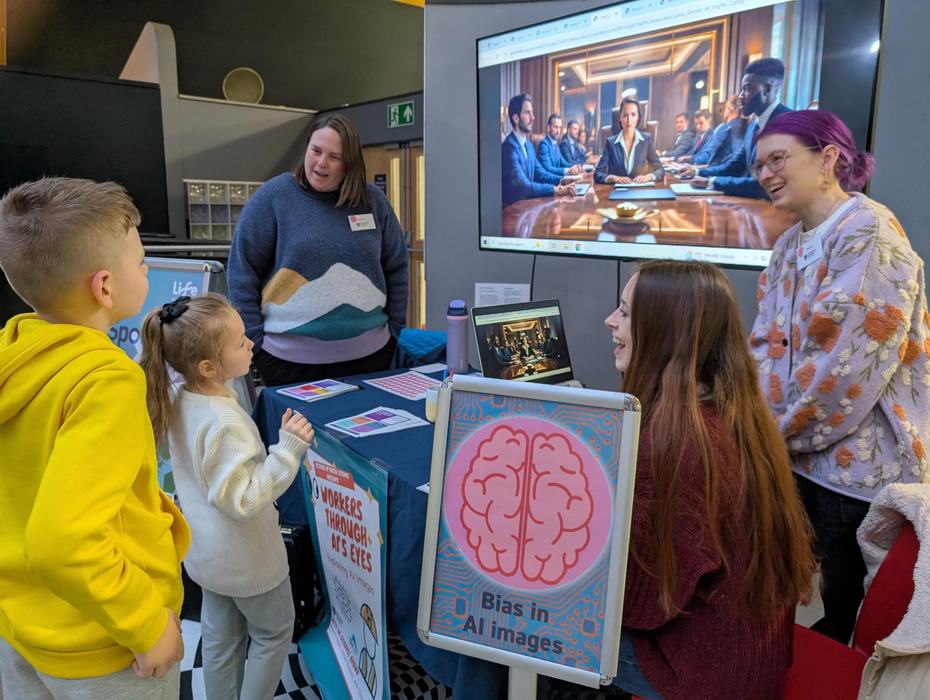
Bias in AI images activity at Centre for Life, Newcastle
After attending 'Demystifying AI' events, at the same three centres, a greater proportion of participants perceived the relevance of AI for the public benefit and for everyday life, with 68% of the people surveyed agreeing with the statements 'I can see how AI is used for the public benefit' or ‘I can see how AI could benefit my community/family’ and a smaller proportion, just 11%, disagreeing showing a 21% decrease as a result of attending the events.
The programme demonstrated the value of in-person, hands-on public engagement in helping audiences move beyond surface-level awareness to critically explore the opportunities, discussing risks and debating real-world applications of AI.
Findings also show growing public curiosity about AI careers and its potential role in society. One educator noted: “Students enjoyed talking about AI with the expert panel and asking questions about the future of AI. Some of the conversations started at [the centre] were continued in class back at school, particularly linked to conflict and the use of AI in war. We were able to debate the ethics of AI and hacking, linked to the showcase and to other work we have been doing on careers.”
Delivery staff were surprised to find audiences were more interested in the scientific uses of AI, than discussing everyday uses and Chat GPT. “People were often more interested in AI in specific science fields rather than in their everyday life, which I thought would be the opposite.”
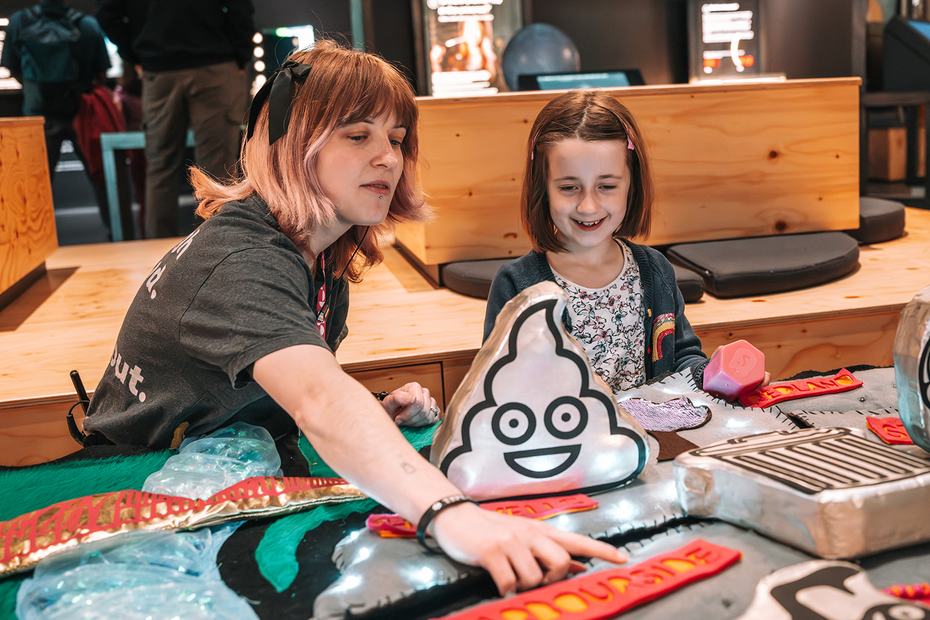
Hands-on interactive map showing 'AI in the City' at We The Curious, Bristol
Focusing on accessibility and inclusion was a key part of people’s engagement with AI. The science communicators designed activities with multiple entry points for different ages, learning styles and confidence levels, using hands-on workshops, sensory activities and adaptable facilitation to support broad participation. Organisations also provided transport bursaries, relaxed sessions for neurodivergent visitors and community outreach activities to break down barriers to engagement.
184 professionals working in AI, both UKRI funded researchers and industry professionals, contributed over 1,400 hours to the outreach and engagement activities in this project.
“In just four months, science and discovery centres have helped tangibly grow public understanding, confidence and trust around AI. The 15 centres taking part reached an impressive 70,000 children, families and educators in that time, demonstrating that there is widespread interest among the public to learn more about AI and grow their skills and confidence around this transformative technology. With government and businesses focusing on how best to encourage adoption of AI to maximise the economic and societal benefits, ensuring broad public access to interactive, in-person learning and engagement opportunities will have a key role to play in ensuring this.”
Elizabeth Poulter, Public Engagement Development Manager, Science Technology Facilities Council (part of UK Research and Innovation)
Across the UK, partner organisations developed creative and locally relevant ways to bring AI to life:
- Armagh Observatory and Planetarium, N. Ireland, created an interactive exhibition using astronomy case studies, digital activities and interviews with scientists to show how AI supports real research.
- Dundee Science Centre integrated AI into the Dundee Science Festival through family shows and a competition asking primary pupils to imagine AI 25 years from now, generating ideas from AI-powered recycling systems to solar-powered fruit-picking robots.
- Xplore! Science Discovery Centre in Wales developed family-focused games and problem-solving tasks to make AI more accessible, exploring how AI works and where it appears in everyday life.
- We The Curious in Bristol delivered ‘AI in the City’ combining playful, hands-on experiences including a large interactive textile map of Bristol revealing hidden uses of AI and the skills needed to engage with it.
‘Demystifying AI’ demonstrates how trusted science engagement can help transform AI from an abstract and intimidating technology into something understandable and socially relevant for communities across the UK.
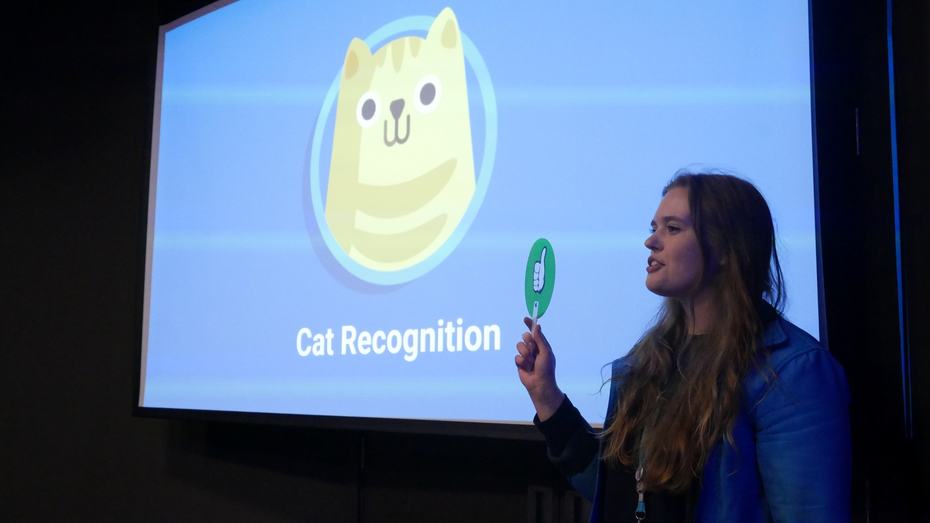
Demystifying AI cat identification activity at Dundee Science Centre
'Demystifying AI' was created by the Association for Science and Discovery Centres (ASDC), partnering with 15 Science and Discovery Centres and Museums across the UK. It was funded by UK Research and Innovation (UKRI), with support and guidance from the Science and Technology Facilities Council (STFC, part of UKRI).